Collective Guide for Bosses
On this page
How to Use
For a thorough explanation, we encourage you to watch the provided instructional video here: https://www.youtube.com/watch?v=J3IOhJ13pgo.
Follow the steps below to understand and take advantage of the collective.
- Go to the collective tab.
- Enter in a key that someone gave to you OR generate your own.
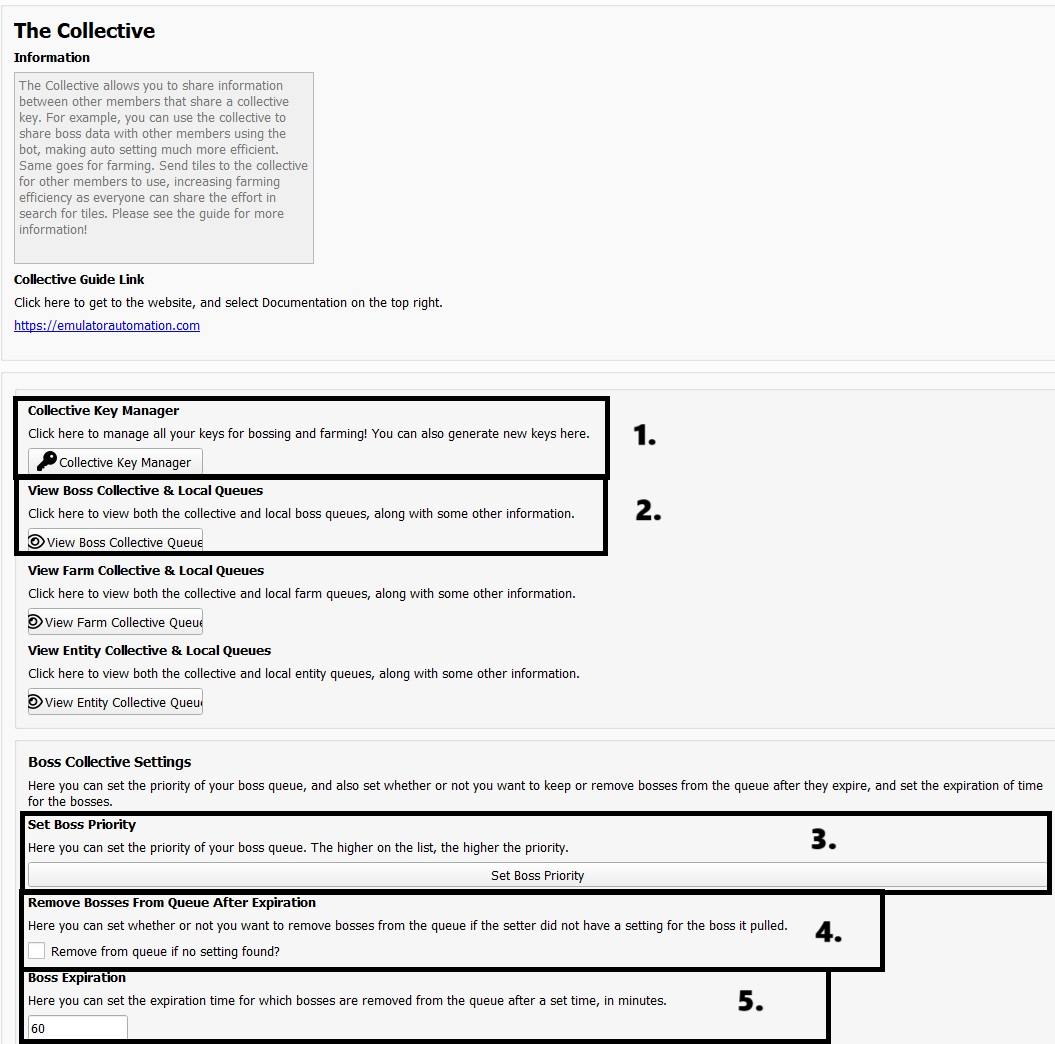
1. Boss Collective Key Manager
- where you can manage multiple keys. Useful for users who want to use collective on multiple servers which require multiple keys.
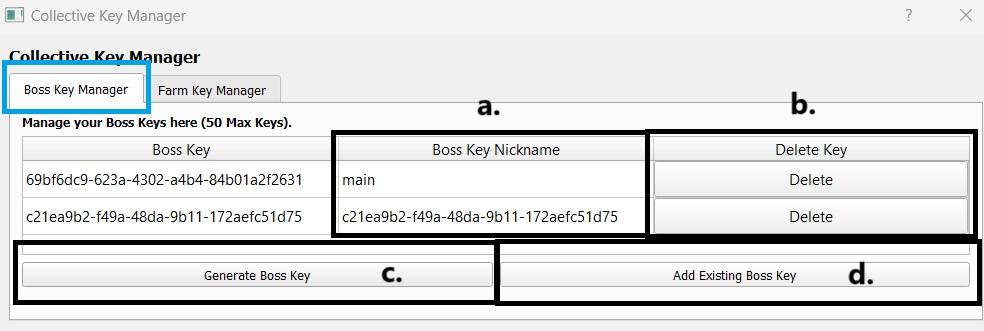
- Boss Key Nickname
- You can add nicknames to the keys to make it easier for you to identify the purpose of each key.
- Delete Key
- You can delete any keys any time.
- Generate Boss Key
- You can generate a new key from here.
- Add Existing Boss Key
- To use the same pool of bosses shared from another user, enter in their collective key.
- Any user who enters the same key as you will have their bosses shared to your collective. You both can then pull those bosses using the auto setter. This helps increase efficiency as other people you know can help you spot bosses!
Warning
Make sure you have picked the right collective key for each tab in the profile tab.
2. Boss Collective Queue
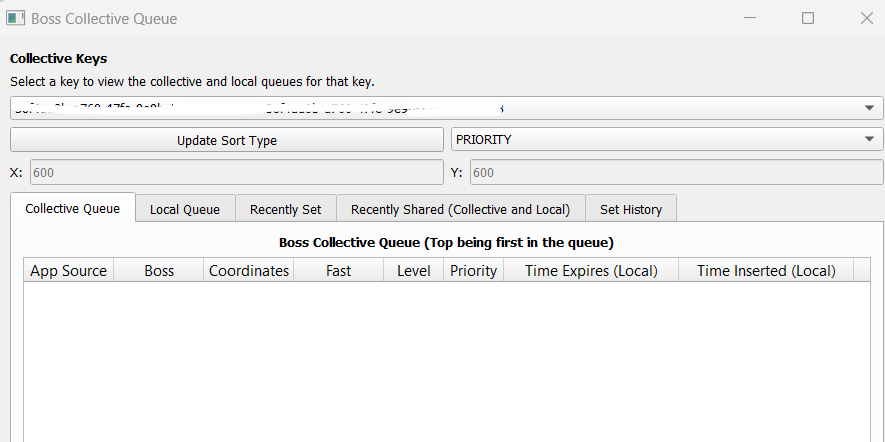
- Select a specific key then you can view what bosses are in them.
- Update Sort Type
- Sort by:
- Priority: Attacks bosses based on your prioritization list.
- Distance: Targets the nearest boss first.
- Priority then Distance: Sorts bosses by priority first, then by distance.
- Reference Point:
- For distance, you can enter reference points for X and Y, which is typically your keep coordinates.
- Boss Collective Queue
- Shows a list of bosses found.
- Local Boss Queue
- These are bosses stored on your local esb application and are the ones up to be set next.
- Bosses Recently Set
- Auto setter now takes into account the rally time and time to march to that boss. That time is added to the recently set list and those coordinates cannot be shared until that time expires.
- Shows all the bosses recently set by all that share the same boss collective key.
- Recently Shared
- This shows the bosses the bot recently found and shared to the collective.
- Bosses Set History
- Shows the history of bosses you have set.
- This will refresh every time the bot restarts.
- Source of Bosses Found
- App Source - Map, Alliance Chat, or Whisper are some of the values you would see so you can identify where it came from.
- User Source - You can identify on bot username who sent the data.
- Fast
- True: Boss was found using Fast Search.
- False: Boss was found using Normal Search.
3. Boss Prioritization
- You can now manage the order of priority of the bosses in your boss' collective queue.
4. Remove Bosses from Queue after Expiration
- Here you can set whether or not to remove bosses from the queue if the setter did not have a setting for the boss it pulled.
5. Boss Expiration (minutes)
- You can set the time a boss will remain in your queue.
Note
Make sure to enable “send to collective” in auto-setter and boss-finder!
Remember, the collective is a team effort! The point is to have other people helping contribute - or if you use the bot on multiple machines, so that they can communicate with each other!